Why UK Investors Are Choosing UAE Real Estate in 2026
Apr 3, 2026
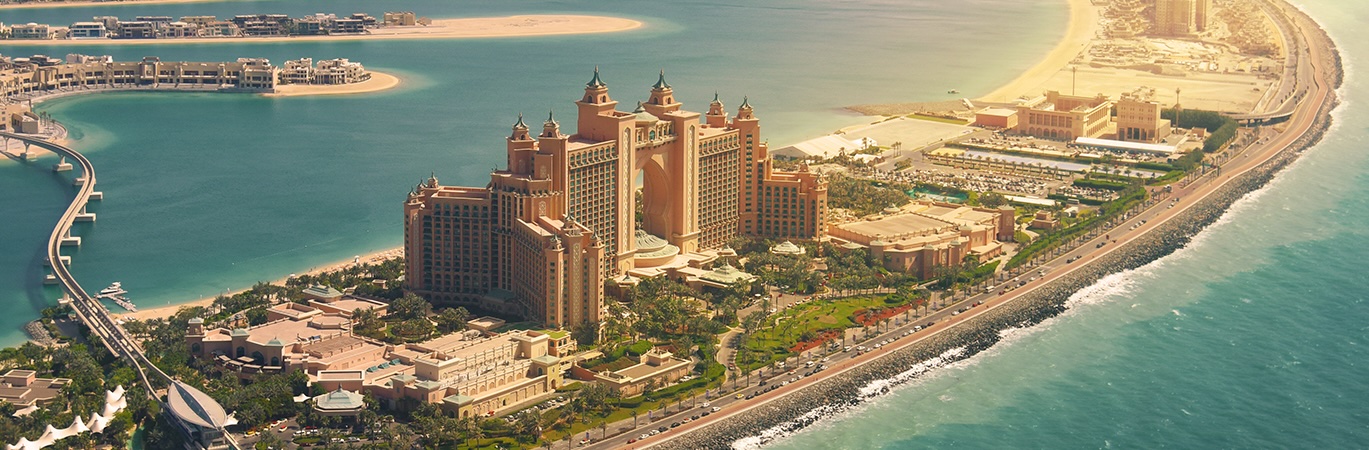
The numbers tell a clear story. British investors now account for approximately 17% of all foreign property transactions in Dubai—a figure that continues to rise year on year. With the UK tax environment tightening and domestic yields compressing, a generation of discerning investors is looking east. The UAE offers something increasingly rare in global real estate: genuine, structural advantage.
01 — A Tax Environment That Changes Everything
For UK property investors, the fiscal landscape has become increasingly punishing. Income tax, capital gains tax, inheritance tax, and stamp duty land tax can collectively erode a substantial portion of annual returns. In contrast, the UAE operates with a structurally different proposition: zero income tax on rental earnings, zero capital gains tax on property sales, and no inheritance tax on assets held in the country.
This is not simply a marginal advantage—it is a fundamental re-framing of what investment returns look like on a net basis. A UK landlord generating a 5% gross yield on a London property may take home as little as 2.5–3% after tax and holding costs. The same gross yield in Dubai can be preserved almost entirely, transforming the compounding mathematics of long-term wealth creation.
| Tax Category | United Kingdom | UAE / Dubai |
|---|---|---|
| Rental Income Tax | Up to 45% | None |
| Capital Gains Tax | 18–24% on property gains | None |
| Stamp Duty / Transfer | Up to 12% (second homes) | 4% one-time DLD fee |
| Inheritance Tax | 40% above threshold | Not applicable |
| Annual Property Tax | Council tax + landlord levies | None |
02 — Rental Yields That London Simply Cannot Match
London's average gross rental yield has held in the range of 2–4% for established residential communities. Dubai, by contrast, delivers average gross rental yields of 6–9% across a diverse portfolio of residential asset types—from studios in Jumeirah Village Circle to prime apartments in Business Bay, and beachfront residences on the Palm.
High occupancy levels compound this advantage. Dubai's rapidly expanding population—which crossed four million residents in 2025 and is expected to add a further 175,000 to 225,000 new arrivals in 2026 alone—creates structural demand that keeps vacancy rates low and rental income consistent. For UK investors accustomed to void periods and tenant management challenges, Dubai's occupancy metrics represent a welcome stability.
Locations such as Dubai Marina (short-term rental demand), Business Bay (professional tenants), and Dubai Hills Estate (family-oriented long-term leasing) continue to deliver strong and sustained income performance. Off-plan investment in these and emerging corridors can unlock even greater capital appreciation potential alongside yield.
03 — Capital Appreciation at a Structural Level
Beyond yield, the UAE offers a capital appreciation story that is increasingly compelling over the medium and long term. Dubai's residential market registered over 205,000 transactions in 2025—an 18.33% year-on-year increase—with a total transaction value reaching AED 539.9 billion. These are not speculative spikes; they reflect deepening structural demand.
Citywide residential values in Dubai reached approximately AED 1,689 per square foot by late 2025, representing nearly 20% year-on-year price growth. Villa prices in particular surged by up to 29% over the prior 12 months, while prime apartments saw appreciation in excess of 20%. For UK investors who entered the market during 2022–2023, cumulative gains since the pandemic have reached as high as 75% in select communities.
Independent analysts at Cushman & Wakefield project additional price and rental growth of 8–12% in 2026, supported by population expansion, continued foreign capital inflows, and major infrastructure investment. The UAE's real GDP is forecast to expand by 5.0% in 2026—the fastest rate among GCC nations and well above the global average.
04 — The Golden Visa: Residency as an Investment Return
One of the most transformative changes to UAE property investment in recent years has been the expansion of the Golden Visa programme. British nationals who invest AED 2 million (approximately £430,000) or more in qualifying real estate become eligible for a 10-year UAE residency visa—with the ability to sponsor family members, establish businesses, and access the full range of UAE public services and banking infrastructure.
For many UK investors, this is no longer simply a financial calculation. The ability to establish legal, long-term residence in the UAE—with its 300+ days of sunshine, world-class international schools, and one of the lowest crime rates globally—has transformed Dubai from an investment destination to a lifestyle choice. Post-Brexit, with long-term European residency routes significantly more complex for British nationals, the UAE's Golden Visa has become an increasingly attractive alternative pathway.
05 — Currency Stability and a Transparent Market
The UAE Dirham has been pegged to the US Dollar since 1997, providing a level of currency stability that is particularly valuable for UK investors wary of Pound Sterling volatility. When the pound weakens—as it has at key moments of political and economic uncertainty—Dollar-denominated assets in Dubai effectively appreciate in sterling terms, adding a natural currency hedge to the investment case.
Market transparency has also improved markedly. The Dubai Land Department maintains a comprehensive, publicly accessible transaction database. Regulatory oversight from RERA (Real Estate Regulatory Agency) governs developer practices, escrow requirements, and off-plan project standards. For UK investors accustomed to robust property law, Dubai's regulatory environment has matured considerably—with processes that many buyers find simpler and faster than purchasing property in some other international markets.
Notably, 86% of Dubai transactions in the first three quarters of 2025 were conducted in cash—a strong indicator of investor conviction and genuine liquidity in the market, with minimal speculative leverage underpinning current valuations.
06 — World-Class Infrastructure and Quality of Life
Investment decisions are rarely made on numbers alone. The UAE's consistently high rankings for safety, infrastructure quality, and liveability have created an environment where high-net-worth British investors do not simply park capital—they increasingly choose to relocate. Dubai is home to world-renowned international schools, hospital networks, and connectivity that places London and other European cities within a direct seven-hour flight.
For those managing global business interests, Dubai's position as a hub between Europe, Asia, and Africa provides logistical and timezone advantages that London increasingly struggles to match. The city's designation as a genuinely international business centre—with significant numbers of Fortune 500 regional headquarters—ensures a deep, diverse, and growing tenant and buyer base that supports long-term asset values.
As one leading developer recently observed: Dubai is no longer a short-term tourism destination. It has become a city of long-term residence, attracting individuals and families who value safety, infrastructure, and economic stability in equal measure.
The Case for UAE Investment Has Never Been Clearer
For UK investors navigating a tightening domestic landscape, the UAE represents a rare convergence of structural advantages: superior yields, zero tax burden, robust capital growth, long-term residency options, and a lifestyle that competes with the world's finest cities.
At Kamani Living, we specialise in guiding high-net-worth British investors through every stage of the UAE property acquisition process—from initial market intelligence to asset selection, legal due diligence, and post-acquisition management.
Ready to explore? Contact Kamani Living to speak with an advisor.